
Is Thinking Out Loud a Bad Habit?
January 22, 2026
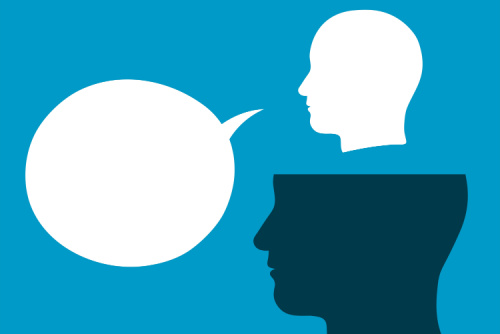
Talking to one’s self out loud (or silently) is extremely common. In fact, psychologists estimate that up 95% of people do it, either silently as inner dialogue or occasionally out loud where others hear it. In most cases, it is a healthy vocal mechanism for self-communication and a way to manage what is going on in their head. So, almost everyone has an internal monologue that’s helpful in problem solving, as well as their own expression of inner emotions.
This “me-myself-and-I” behavior is considered to be a natural, innate human response that emerges spontaneously in children, rather than as a learned skill. However, when used as an adult to process thoughts, emotions, and experiences, it can serve as an internal monologue to recount feelings for self-regulation, cognitive planning, or as a boost to motivation. So, almost everyone has their “little voice” or stream of thought, which means it’s universal by nature.
Research does indicate that children do not need to be taught to talk to themselves or to think aloud about resolving situations. In fact, self-talk that is initially heard by others as out-loud communications commonly evolves into internalized silent speech as children age. Moreover, research studies of other animals show non-human primates often use a primitive form of sign language to manage the situation at hand with their own self-directed communications link.
Self-talk may be a sign of negative neural networking...
Even though negative self-talk can be a sign of rumination, it is normally a natural mental process that can help unhook problems from each other to more clearly define the actual problem that someone needs to solve. Nonetheless, since rumination means to repetitively go over a thought or problem without finding solutions, recalling of stressful occasions where things worked out can actually help activate a different neural network for a reduction in both anxiety and depression. After all, it helps to eliminate feelings of inadequacy while restoring their sense of worth.
Since negative neural networks are often triggered by mood, it is your mood at any given time that might be connecting to other thoughts, such as a fear of bad outcomes. Thus, not giving proper credit and mental recognition to previous positive outcomes stored in your memory cycle can result in trying to resolve an important issue as a person harboring depressed thoughts. With that said, the idea of moving into a more positive network is not an exercise in memory retrieval but a mental springboard that reverses the direction of thinking that is needed to eliminate the unrelated issues in order to find the best solution.
Where self-talk in a majority of cases is simply an innate behavior, rumination is considered to be a cognitive health issue that is characterized by the persistent, repetitive, and uncontrollable cycling of negative thoughts. After all, these are thoughts that most often revolve around past mistakes. It happens when worry and emotional distress fuel the compulsion that exacerbates an OCD-like mental state and can lead to health issues like insomnia. Such behavioral loops also leave the person feeling stuck in not being able to find a solution and the core symptom of the generalized anxiety disorder is more depression.
What To Do When Self-Talk Isn’t Working
The better that you get at interrupting compulsive negative behaviors like rumination; the quicker you can reduce the flow of brain patterns that contribute to dysfunctional amounts of mental energy. Identifying and stopping rumination gets easier the more you practice applying well-known behaviors used to fuel more innovative and creative solutions. For the most part, actively breaking down the issues into smaller opportunities helps to reverse thought patterns that are likely contributing to the lack of mental focus.
Not surprisingly, people whose jobs require them to spend more time alone are also more likely to keep themselves company by chit-chatting ideas out loud. In fact, the same is true for an “only child” who might engage in self-talk more frequently than those with siblings. Some adults even admit to having had an imaginary companion that they talked during childhood. As an adult, studies have found that a new or novel problem is more likely to trigger obsessive-compulsive behaviors that are related to talking to one’s self.
So for the most part, talking out loud to yourself is both natural and normal, as it is a tool to improve your ability to focus on the problem and perform a task at hand. Equally important is the fact that self-talk can be personally and collectively motivating for the team. In one study, basketball players are often skillfully coached to talk through their moves out loud in a covertly instructional way. Once again, when a situation requires lots of steps, language is an excellent tool for sequencing tasks to stay on track by knowing when to switch steps.
Since talking to one’s self can be a simple way to blow off steam, it is also a tool used to let other people know what you are thinking or feeling in real time. Couples quite often talk to themselves but know that their partner will hear what they said, which is a good example of how interpersonal self-talk may trigger an intrapersonal response that encourages the couple to continue talking about an issue. Some psychologists recommend thinking about self-talk as an internal thermostat that allows you to adjust the temperature of your emotions that day.
Techniques to Make an Inner Voice More Constructive
Improving self-talk involves intentionally making a shift from a compulsive view of overlapping issues to more constructively focusing on one problem at a time. Experts recommend using second-person pronouns like “you can do it” rather than saying “I can do it” as a common mindfulness strategy used to replace doubt and negative thoughts. Whether delivered out loud or in silence, the goal is to create the mental distance needed so you can coach yourself like a friend rather than being trapped in a negative loop. Here’s some strategies for boosting self-talk:
- Reduce Rumination – Making slight modifications to using self-talk can improve cognitive functioning that will help your brain more clearly organize overlapping thoughts and process information more effectively in real time.
- Third-Person Talk – Referring to yourself by name can provide helpful self-distancing. By regulating your emotions with this unique tip, you can perform better under social stress like during when delivering a speech in public.
- Personify the Inner Critic – Certainly creating distance can make your own self-criticism feel much less absolute and more like an unreliable opinion that should be ignored. You can even give your inner voice a silly third-person name.
- Use the Close Friend Rule – This requires that you only say things to yourself that you would say to a friend. For example, you wouldn’t call a friend “stupid” for making a mistake, so avoid making negative comments about yourself.
- Inanimate Debugging – Instead of self-speak to explain problems to yourself, try explaining your problem to a rubber ducky. Vocalizing details to an object can reveal gaps in your logic as well as solutions you may have missed while silent.
- Cognitive Restructuring – Once you identify negative thinking, put what you told yourself “on the stand” to dismantle the narrative and determine if the belief is grounded in fact or just a distraction related to your negative imagination.
- Adopt the “Yes.. and” Method – Instead of trying to fight negative thoughts, acknowledge your feelings but add the next step. For example, “Yes I made a mistake, but next time I can learn from it to better fix the problem.
Talking to yourself out loud creates a "mental exoskeleton" by recruiting extra brain circuits for auditory processing and motor skills. This helps turn that messy cloud of negative emotions into a sequencing language that your mind can more easily manage. Nonetheless, improving how you use self-talk requires mindful practice and is not an overnight change. But, when routinely practiced, self-talk offers many benefits, such as faster cognitive processing, improved memory of details, better emotional control, and overall enhanced performance.
________________________
Out loud or in your head, self-speak is perfectly normal and can be beneficial when seeking resolution or boosting your motivation as a problem solver. So, becoming your own coach will allow you to address those inner critics, lower anxiety to redirect your focus, and reframe your internal dialogue with more supportive statements. Additionally, language pathologists and sport coaches have consistently demonstrated how applying positive strategies to self-talk can be beneficial for improving how well people perform at a task. Since language is useful for sequencing things, talking to one’s self out loud can help individual’s and team members stay focused on tasks, as well as to know when to switch patterns. Contact the experienced team at ProLingo at 800-287-9755 to learn more about our established network of language providers that can help your organization meet the highest standards for both internal and external messaging.


