
Skills Sets for AI Multilingual Messaging
February 9, 2026
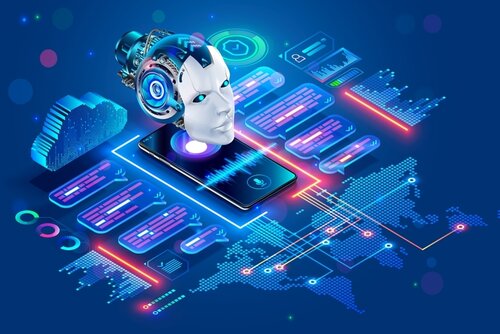
Are you looking to build a multilingual AI messaging team from scratch, or are you interested in upskilling your existing team for specific roles that use artificial intelligence? If so, running and maintaining AI to ensure more efficient communication internally and across multilingual markets requires leadership to redefine their technical and strategic models in order to deliver more accessible and highly accurate communications across today’s global environments.
For starters, it is crucial that your team understands artificial intelligence is NOT a magical solution for accessing, translating and distributing critical messaging that ensures the most accurate, safe and actionable outcomes. Regardless of your company’s application, artificial intelligence is simply the latest tool to manage your communications infrastructure. AI creates a high-tech platform of logical systems to enable faster transmission of data, voice and video over long distances.
AI technology acts as the backbone for digital communication by incorporating sophisticated hardware and software protocols that allow for global connectivity, the exchange of information, and study of interactions in many languages. But, AI-powered generative tools cannot accurately facilitate seamless interactions between employees, strategic partners and consumer populations without the unique skill sets of “human touch.” After all, AI generates output based on algorithms, where only a human can determine the desirability of your messaging.
Why communication is classified as a critical sector...
In the United States, communications is classified as one of the 16 critical infrastructure sectors by the Cybersecurity and Infrastructure Security Agency (CISA). It is also considered an "enabling function" because it supports all critical sectors for processing global transactions. CISA sees the private sector as primarily responsible for protecting the communication infrastructure as well as its data assets. Here’s some combined roles for AI and human-based detection:
- Combating Fraudulent Messaging: Attackers use AI-powered Natural Language Processing (NLP) to create highly personalized, convincing phishing emails and fake communication that mimic trusted sources, necessitating advanced AI-based and human detection.
- Securing Data Transmission: AI systems rely heavily on cloud-based, constant data flow controlled by humans. Securing your communication channels ensure that sensitive information, such as your company’s intellectual property or customer data, is not intercepted during transfer.
- AI Role in Managing Human Risk: Over 85% of cyberattacks exploit human vulnerabilities through deceptive communication tactics. AI is used in this sector to train employees, detect anomalies in communication behavior, and provide real-time, automated responses to potential breaches.
- Incident Response Management: During a security incident, effective communication using AI for faster analysis and reporting is essential for mitigating reputation damage. Communication security ensures that AI models are not compromised by adversarial inputs sent through API interfaces.
Communication is a critical sector because it addresses high risk human elements and ensures trusted interactions that AI systems use for transmission of information. So, your team should view AI as the nervous system of your company’s digital world that requires a lot of watchful eyes. Effective multilingual communication creates the bridge between human expertise and AI’s unique multiple language processing capabilities. However, transparency of AI’s limitations, potential biases, and human decision-making processes require the responsible use of AI-powered communication tools.
AI Technology Combined with Real Data Skills
Most often referred to as The 1954 Experiment, Georgetown University and IBM marked the first public demonstration of machine translation using a rule-based NLP (natural language processing) approach to translate sixty Russian sentences related to politics, science and law into English. This was a landmark application of digital technology for non-numerical tasks. Naturally, very excited researchers errantly estimated fully-automated and highly-accurate multilingual translations were just a few years away.
Unfortunately, those promising results led to overly excessive optimism about upcoming applications of artificial intelligence (machine learning using NLP) for both cost-effective and highly-efficient multilingual messaging. In fact, there was much to be learned about how AI could be used to interpret tone, intent and context of communications to ensure the most accurate translations. This has required the development of algorithms with proficiency as neural networks. Today, transformer models can handle more complex sentence structures for multilingual context.
Nonetheless, AI is only as good as its training data, often referred to as its Large Language Model (LLM). This is where human skills have played a major role over the last seven decades for writing, cleaning, processing, and preparing high-quality multilingual datasets. The ability of linguistic engineers to craft highly structured prompts (code) with specific guidance on industry-specific vocabulary has significantly improved neural network translations, but the “human touch” is still needed to adapt messaging beyond just literal translations.
Multilingual Messaging Relies on Human Competency
Beyond making literal translations in another language or dialect, your team must be able to adapt your content to local cultural context to ensure your branding and messaging remains both appropriate and compelling. To begin with, selecting and using AI-powered tools that automatically identify the user’s language is essential for seamless routing into your organization’s messaging systems. In example, this includes being able to identify biases and underrepresentation of certain groups to specifically target given languages.
Effective digital communication systems today must ensure their organization’s AI output can correctly maintain your brand’s voice across multiple languages. This is where the Human-in-the-Loop uses analytics to track efficiency, customer satisfaction and engagement metrics that can specifically track each target language. It is through this level of human touch that provides the critical thinking and assessment of AI-generated results to ensure AI is operating fairly and transparently. Humans can evaluate AI results for accuracy and ethical soundness rather than accepting the data verbatim.
Today, professional interpreters and experienced translators are still very much needed to refine AI output in order to maintain a consistent brand voice for consumer messaging in the global village. However, to ensure emotional resonance across different languages, it is crucial to implement and carefully manage AI tools that can automatically identify critical nuances to ensure your multilingual messaging remains appropriate and compelling. Without doubt, human-in-the-loop are needed to effectively pair AI technologies with human review to catch errors and provide the empathy that machines so often lack.
_____________________
Multimodal sensing in contextual AI systems today has, however, gotten better at integrating information from a variety of sources, such as text, images, speech, location, etc., to garner a more comprehensive understanding of the situation. However, at least for the time being, artificial intelligence may continue to struggle when confronted with translating context that differs significantly from its LLM’s training data. After all, it is absence of empathy and emotional intelligence that allows AI to mimic the emotional tone of multilingual content but without the genuine feel that shapes human understanding. If you are using AI-generative tools to translate multilingual content that contains sensitive messaging, you will be dealing with data that needs the extra protection of human touch. Contact the experienced team at ProLingo at 800-287-9755 to learn more about our established network of providers that can help you meet the highest standards for multilingual communication.


